
Posted by Ross on Jun 3rd 2026
Format Philosophy - "How should I play?"
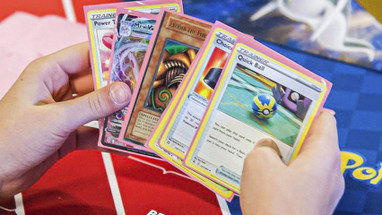
When I first ventured into the world of Pokémon TCG, game formats always felt a bit overwhelming to me. Standard Format was limiting, "Just because my Electabuzz is 27 years old, he can't hang?", and Expanded Format never was quite expansive enough for me, "What do you mean I can't use Exodia The Forbidden One to send my opponent to the Shadow Realm?"
Breaking it down, A format, or “rule-set,” isn’t only a dry checklist of deck-building restrictions or an official ban list; it is a framework that shapes agency and tactical choices on the playmat. The Standard format operates on a philosophy of the temporary, systematically cycling out older expansions and pushing players into a state of constant adaptation. On the flip side, rulesets like Expanded, Unlimited, or U150 treat mostly every piece of cardboard printed since 1999 as a viable component (but apparently not Exodia). Whether formats impose rigid parameters or total freedom, they serve as a lens to focus player ingenuity and spark creativity.
Diverse play styles don't actually reside in the rarity of the cards or the official rulebook sanctioned by a global brand. Instead, they live within the social agreement between the two nerds sitting across from one another. Looking closely at the hobby, you realize that the mechanics of the game only carry weight because the players mutually agree to honor them. It doesn’t matter if you are executing a hyper-optimized, turn-one sequence at regional championships, or using arbitrary house rules in a high-HP kitchen table slugfest—both scenarios represent a shared act of imagination. The guidelines exist primarily to establish a mutual playground. By shifting our perspective from rigid compliance to collective enjoyment, the cardboard itself takes a backseat to the genuine human connection and community that the game was always meant to foster.
There is truly no wrong way to engage with the Pokémon TCG. The game expands fluidly to fill whatever emotional or intellectual space a player needs it to: a cutthroat and highly technical sport, a nostalgic time capsule, or a chaotic tabletop sandbox featuring Exodia The Forbidden One. Every single style of play is entirely valid. As long as two players find strategy, amusement, and meaning across the playmat, the game is fulfilling its ultimate purpose.